Finance
Blog
AI vs. Manual Expense Tracking: Which One Saves You More Time?
Manually tracking receipts and updating spreadsheets takes hours away from growing your business. Compare manual expense tracking with AI-powered financial tools to see how automation improves accuracy, provides real-time spending insights, and gives you back hours of your workweek.

Xpensetrim
July 31, 2026/3 min read
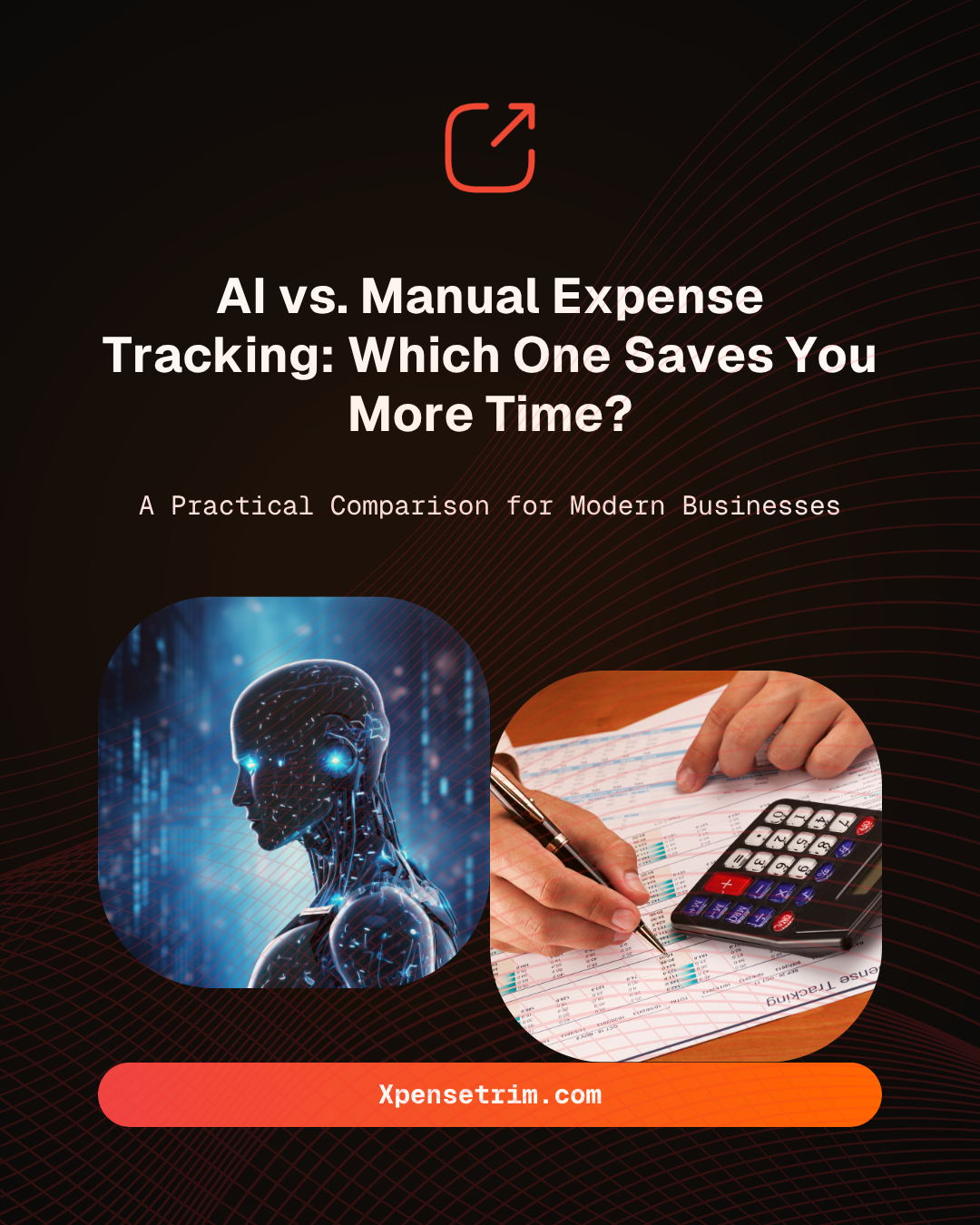
Time is one of the few things you can never get back.
Every business owner knows there's always more to do.
- Responding to customers.
- Managing operations.
- Growing sales.
- Planning for the future.
The last thing anyone wants is to spend hours manually recording expenses.
Yet that's exactly what many businesses still do. The question is no longer whether technology can help. The question is whether you're making the best use of your time.
Let's compare manual expense tracking with AI powered expense management.
What Is Manual Expense Tracking?
Manual expense tracking involves recording financial transactions yourself.
This could be through:
- Spreadsheets
- Notebooks
- Paper receipts
- Basic accounting templates
It works.
But it also requires a lot of time and attention. Every expense needs to be entered manually. Every report needs to be created manually. Every calculation depends on human accuracy.
The Challenges of Manual Tracking
While manual tracking is a good starting point, it becomes more difficult as your business grows. Some common challenges include:
It Takes Time
Recording dozens or hundreds of transactions every month can quickly become overwhelming. Time spent updating spreadsheets is time you're not spending growing your business.
Human Errors Happen
- Typing mistakes.
- Missing receipts.
- Broken formulas.
- Incorrect calculations.
Even small errors can affect financial reports and business decisions.
Limited Financial Insights
Manual records tell you what happened. They don't always help you understand why it happened. Without meaningful insights, improving your spending habits becomes much more difficult.
What Makes AI Different?
Artificial Intelligence isn't just about automation. It's about making financial management smarter.
Instead of spending hours organizing transactions, AI can:
- Automatically categorize expenses.
- Identify spending patterns.
- Highlight unusual transactions.
- Generate useful financial insights.
- Provide recommendations that support better decision making.
The result?
- Less time managing finances.
- More time growing your business.
Does AI Replace Good Financial Habits?
Not at all.
AI doesn't replace discipline.
It strengthens it.
You still need to budget wisely. Review your finances regularly. Set financial goals.
AI simply gives you better information and saves you valuable time.
Think of it as having a smart financial assistant working in the background.
Why Businesses Are Making the Switch
Growing businesses need speed. They need accuracy. They need visibility.
Most importantly, they need tools that help them make better decisions without creating more work.
That's why more businesses are moving toward AI powered financial management.
The Future of Expense Management
Financial management is changing.
Businesses are no longer looking for tools that simply store information.
They're looking for tools that help them understand it.
That's the future we're building at Xpensetrim.
Our goal is to simplify expense tracking through Artificial Intelligence, giving businesses the confidence to make smarter financial decisions every day.
Final Thoughts
Manual expense tracking has served businesses for many years. But today's businesses need more than records. They need insights. The right financial tools don't just save time. They help you make better decisions with confidence. Because when you spend less time managing expenses, you have more time to build the business you envisioned.